The Record
Citizens on the Record
Every affidavit and lawsuit collected here was filed pro se—by citizens representing themselves, without teams of lawyers or millions of dollars to fund a legal fight — exercising their right to be heard, standing on their own convictions, and doing everything within their power to put their experiences on the record.
That takes courage. It takes determination. And it takes a willingness to stand up when staying silent would be easier.
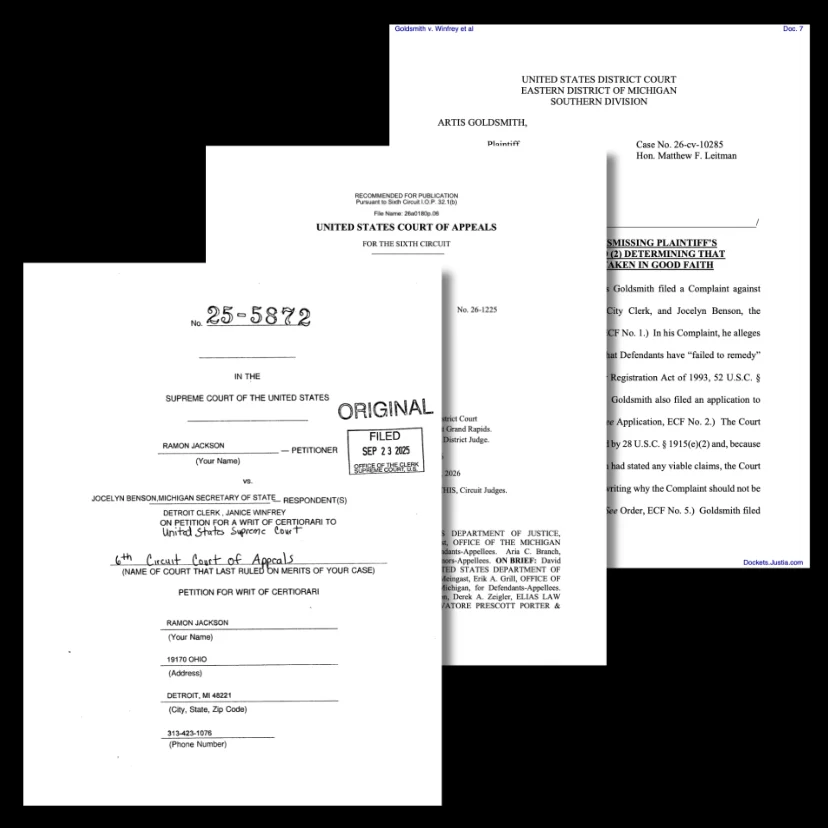
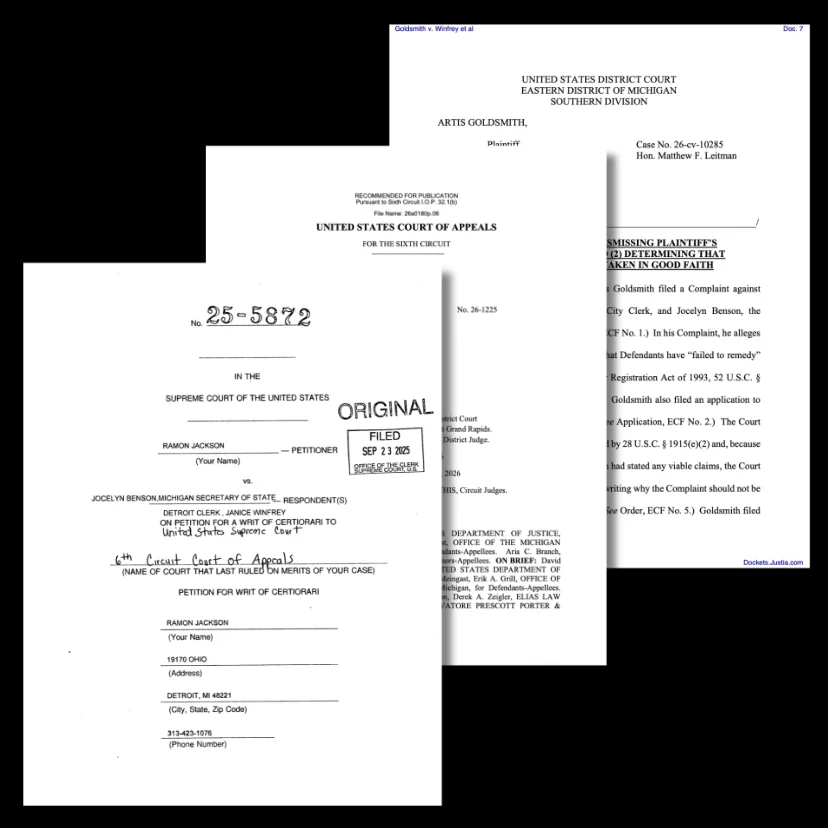
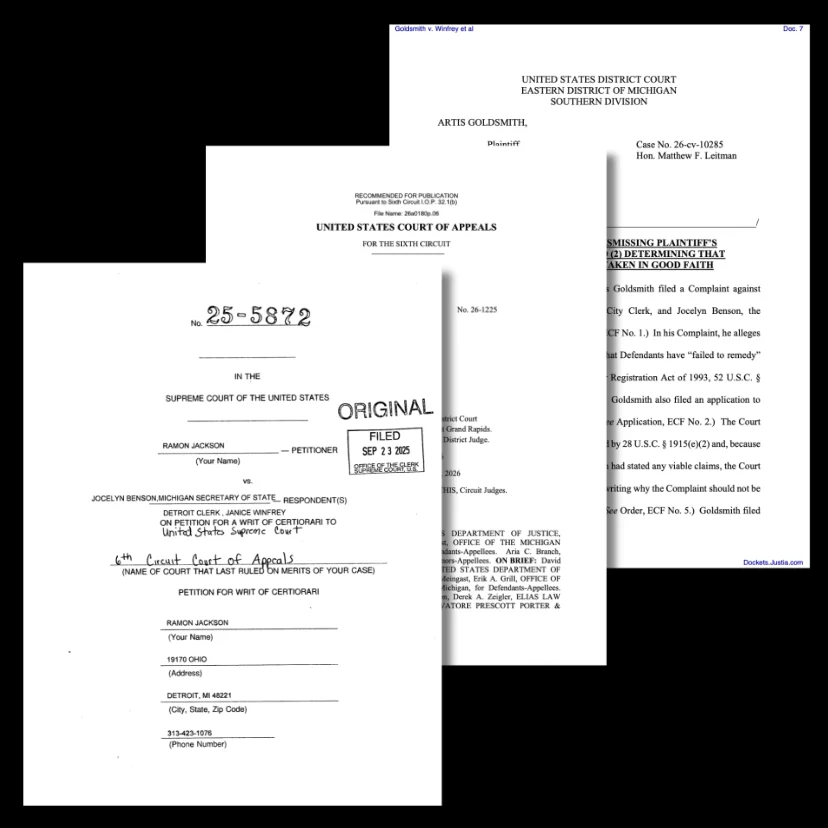
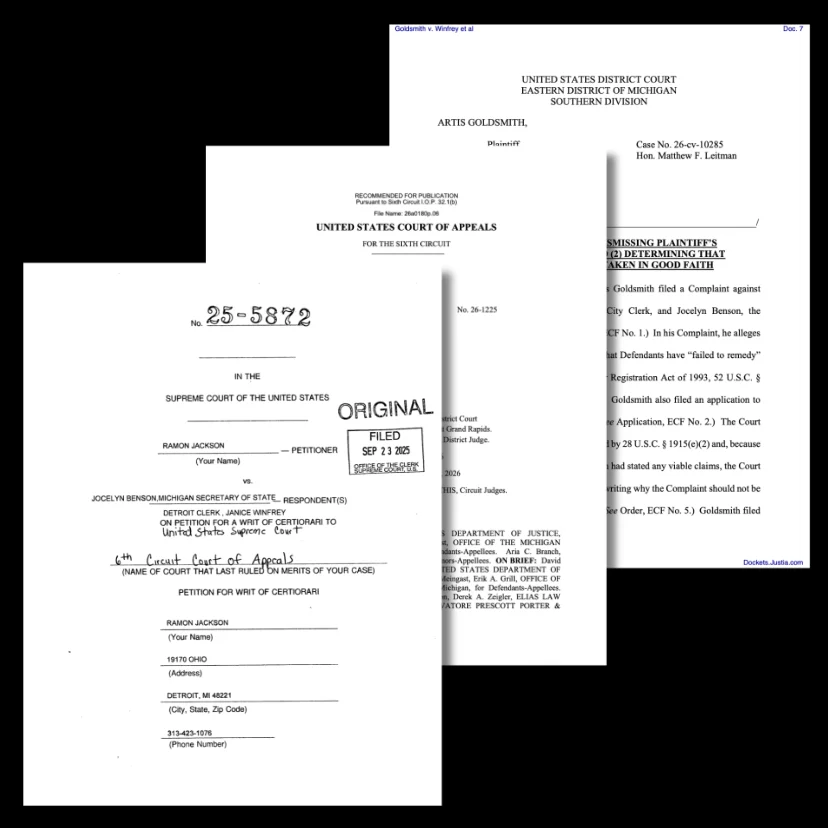
We applaud Ramon and the brave Detroiters who stepped forward, signed their names, and spoke truth to power.
These are their words. These are their filings. This is their record.
Love v. Benson et al
Melissa Love is an unrepresented Detroiter who filed a voting-rights case against the two officials who actually control her registration — the Secretary of State and her own city clerk — and did it the hard way: no lawyer, no filing fee, dependent on the U.S. Marshals for service. She then had to litigate against a state AG's office and city counsel from a Whitewood Street address that mail kept bouncing off of. The undeliverable mail and the address change aren't sloppiness so much as the ordinary texture of being a person without stable housing or a law office trying to keep pace with a federal docket, and she did respond to both show-cause orders — including one that arrived while her mail was already failing.
Goldsmith v. Winfrey et al
Artis Goldsmith is another unrepresented Detroiter who brought a voting-rights complaint against his city clerk and the Secretary of State in January 2026, filing without a lawyer and without the money for the filing fee. He got a show-cause order in April giving him a month to either justify his case or amend it, and he did respond — before Judge Leitman summarily dismissed the complaint in May and certified that any appeal would not be taken in good faith, a finding that strips the ability to appeal without prepaying fees. He appealed to the Sixth Circuit anyway, without paying, and the appeal was terminated in July. That's a person who kept showing up at every step the system asked him to — respond, amend, appeal — against a procedural bar built to end cases like his early, and whose actual grievance never got tested on the merits.
Mcclaster v. Winfrey
Linda McClaster sued the Detroit City Clerk over a voting-rights claim in January 2026, and unlike the other two she paid the $405 filing fee herself rather than asking to proceed in forma pauperis — she wanted the case on ordinary footing, no favors asked. Winfrey's counsel moved to dismiss in March; McClaster, without a lawyer, filed a written opposition within about two weeks, and the motion drew a reply and a referral to Magistrate Judge Grand. When a show-cause order came in mid-June, she answered it on time, and the court vacated the order in July. That's the meaningful difference from Love and Goldsmith: her case is still alive, she has met every deadline the court has set, and she is going toe-to-toe with city counsel on a fully briefed dismissal motion — the last docket entry is the court confirming she's still in it.
Gibson v. Benson et al
Fudail Gibson filed on October 1, 2025 — the day before Melissa Love, against the same two officials, also without a lawyer and also asking to proceed without prepaying the fee. Judge Kumar granted the fee waiver and ordered service by the U.S. Marshals, and Gibson kept the case moving: summons issued, Marshals acknowledged receipt in November, Benson served in December. When neither defendant answered, he requested a clerk's entry of default — the correct response to a defendant who ignores the clock — and it was denied on a local-rule technicality, after which the state AG's office and city counsel promptly appeared. In January he wrote to the court directly. Same pattern as Love, right down to the LR 55.2 denial: a man doing the procedure correctly in substance and getting stopped on form, then watching three lawyers materialize the moment the default was off the table.